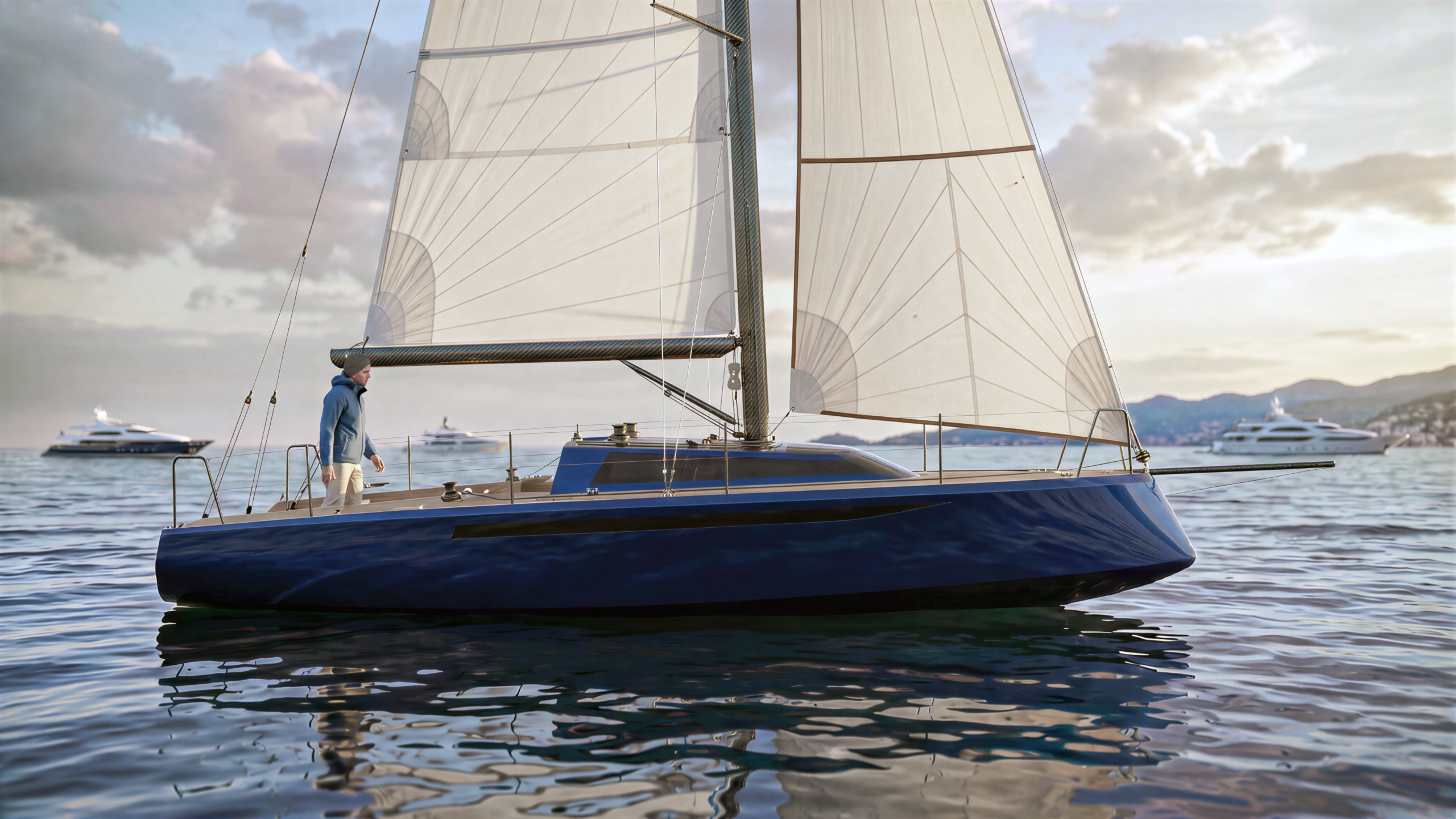
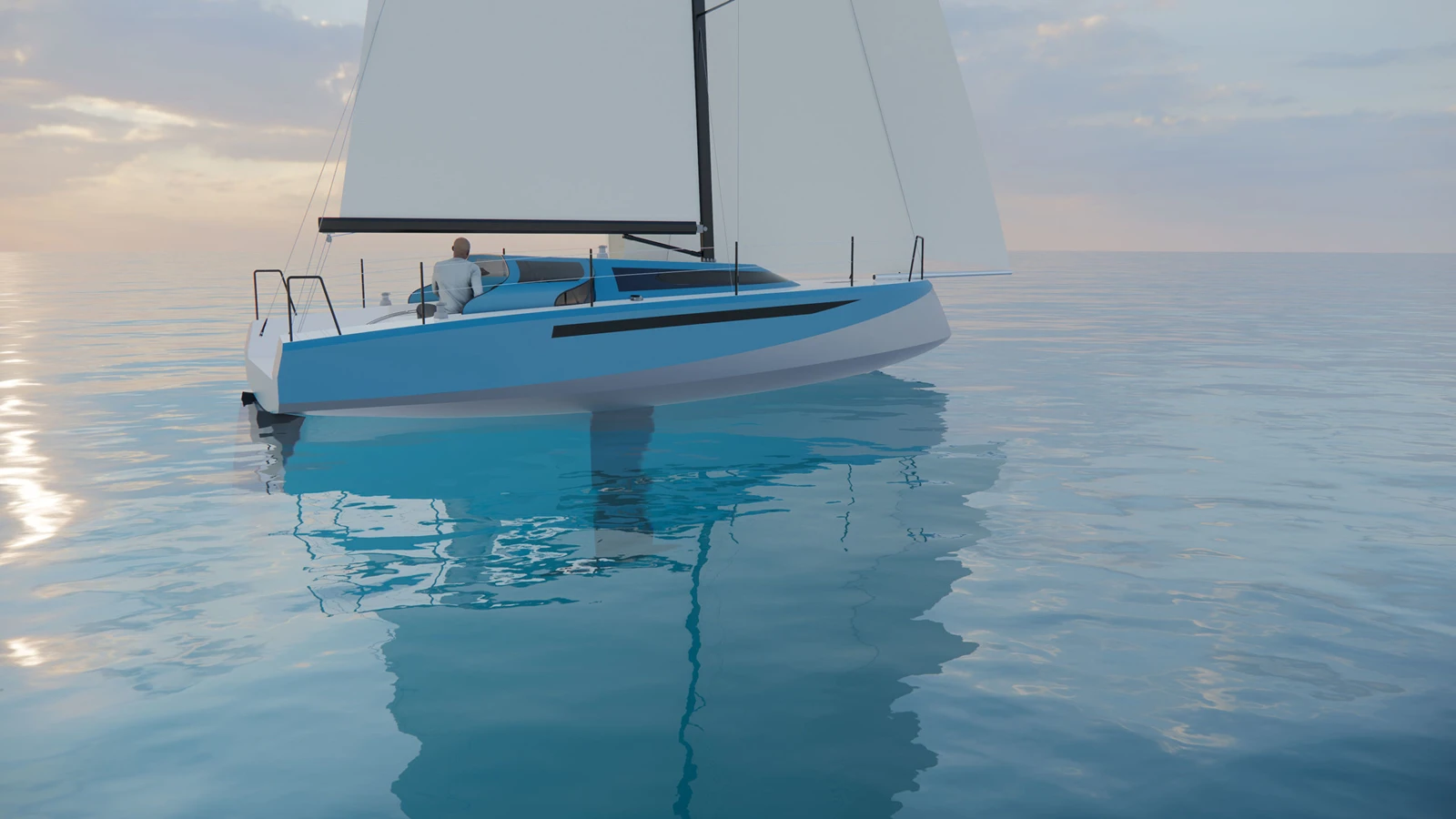
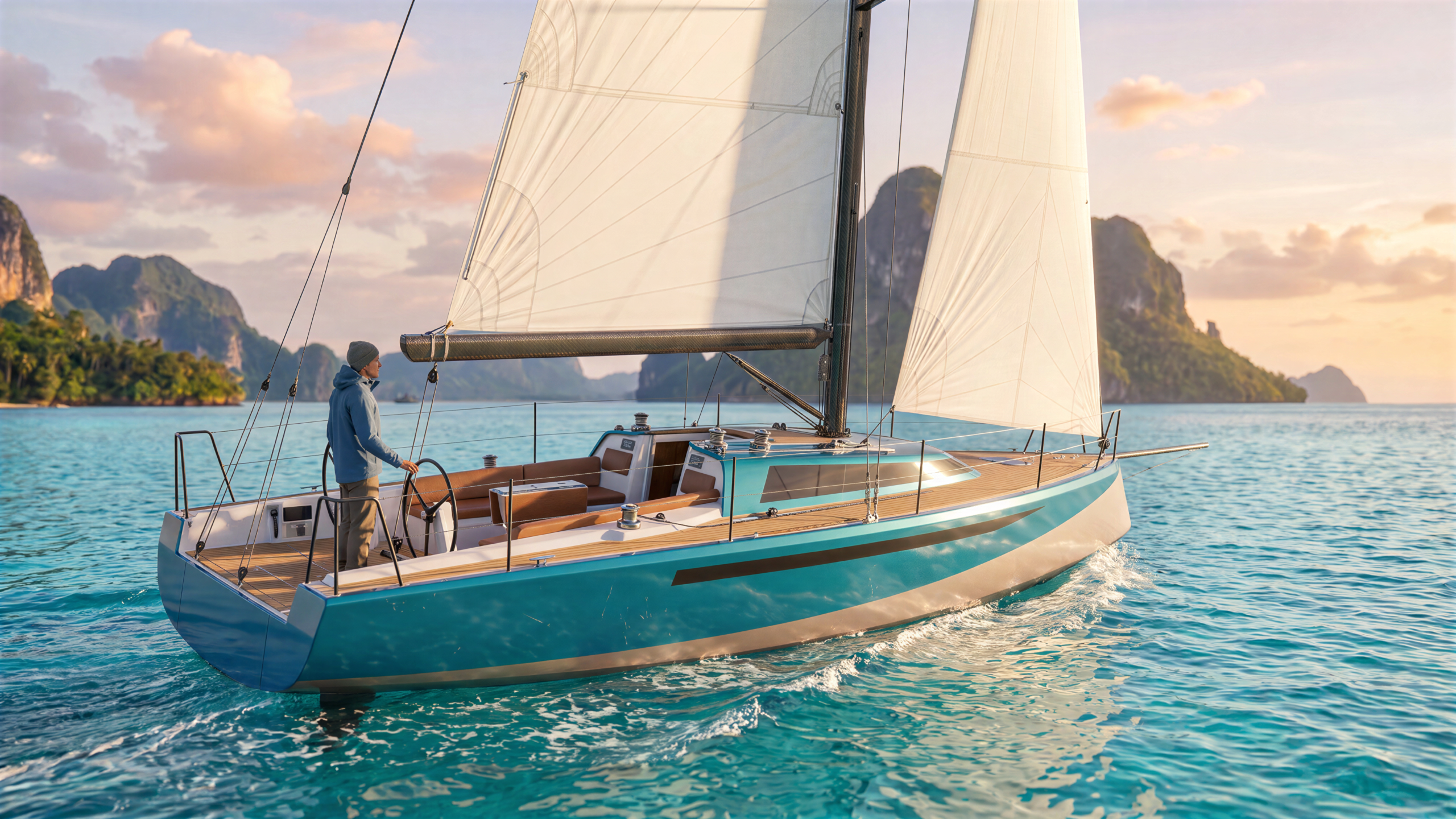
Developed in collaboration with NST, the NST-IM01 project focuses on the design of a sailboat under 9 meters (30 feet), built for racing before transitioning to recreational cruising, while aiming to minimize its environmental footprint and strictly complying with the rating rules
From the earliest stages, this dual purpose shapes the design process. The naval architecture, exterior lines, and interior layout are designed to accommodate both uses of the sailboat,without requiring major modifications.
The concept takes shape through research, sketches, and 3D modeling, leading to the preliminary design. Every aesthetic decision serves a technical purpose.
My approach to this sailboat design draws inspiration from the world of surfing, particularly from my own surfboards.
The pursuit of lift, a key aspect of surfboard design, influences the shape of the hull. I explore a scow-style hull combined with an inverted bow to create a distinctive profile.
This exploration of form is closely connected to naval architecture, where technical constraints inform design decisions from the very first sketches.
The NST-IM01 is initially designed for racing. It can then transition to recreational cruising without requiring major structural modifications.
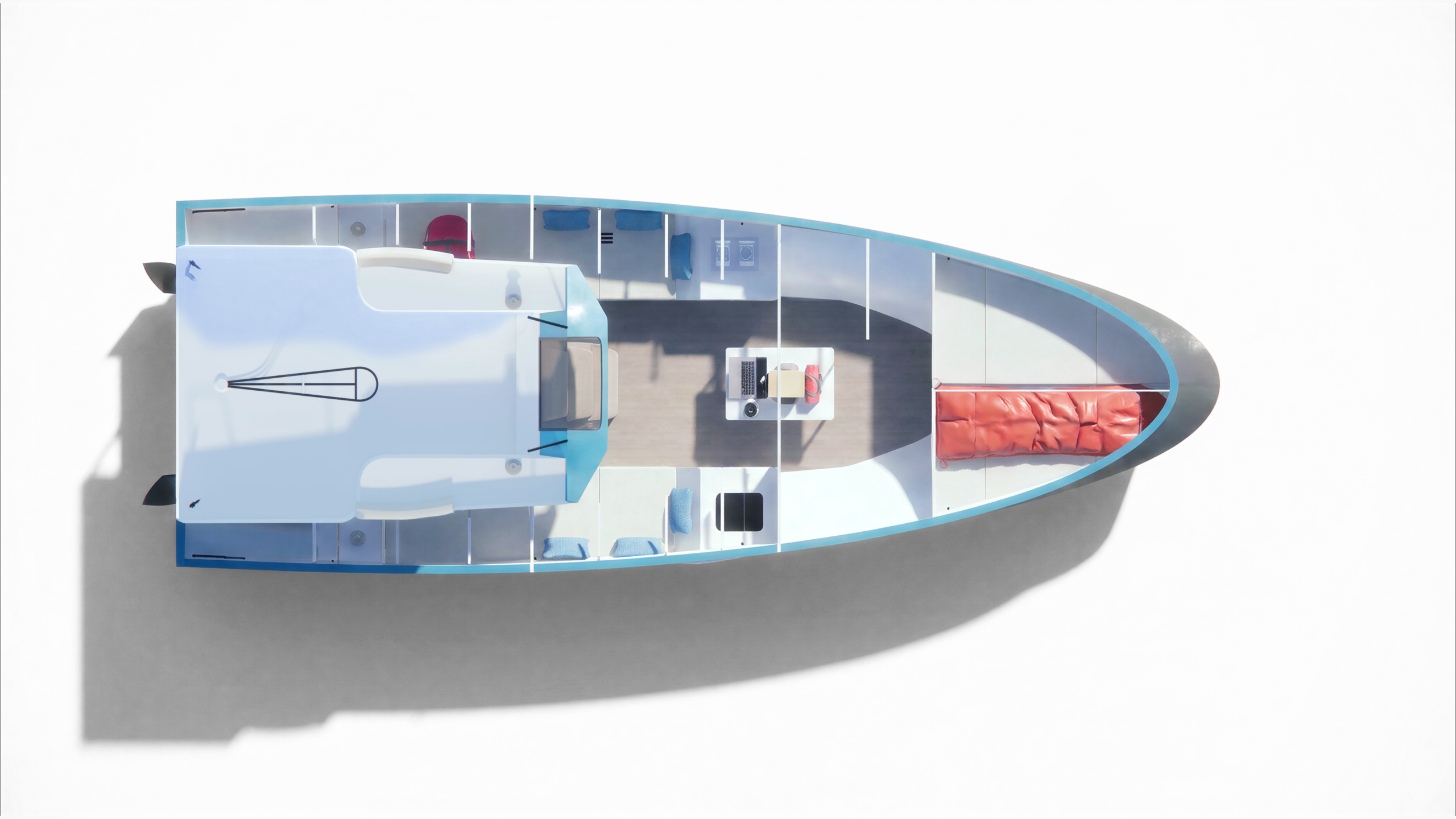
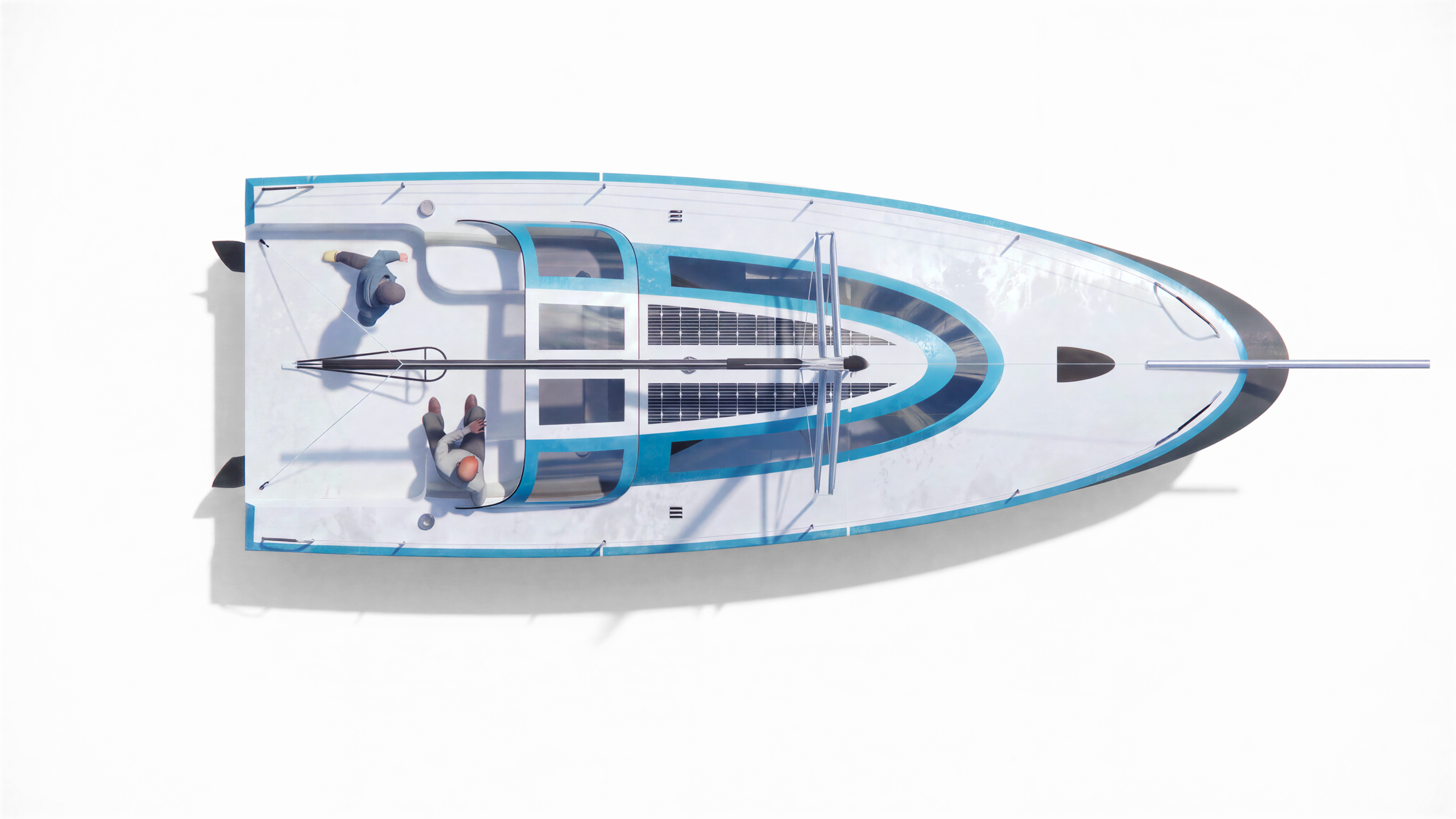
The modular, sheltered cockpit plays a central role in this transition. Designed as a separate structure from the hull, it allows for different configurations to suit various uses and the expectations of future owners.
More luxurious modules can be introduced to enhance the existing layout, adapting certain elements without redesigning the entire boat.
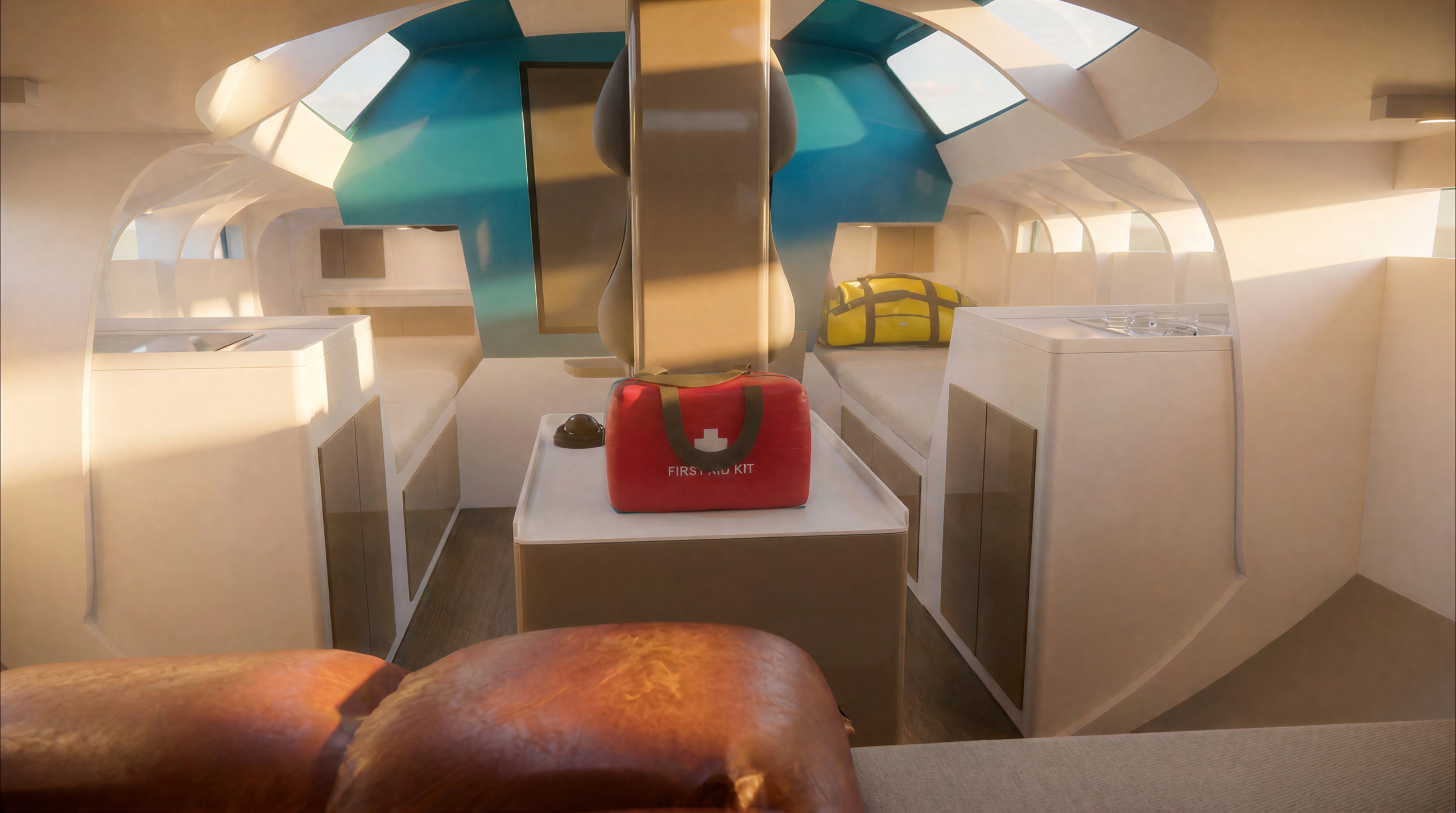
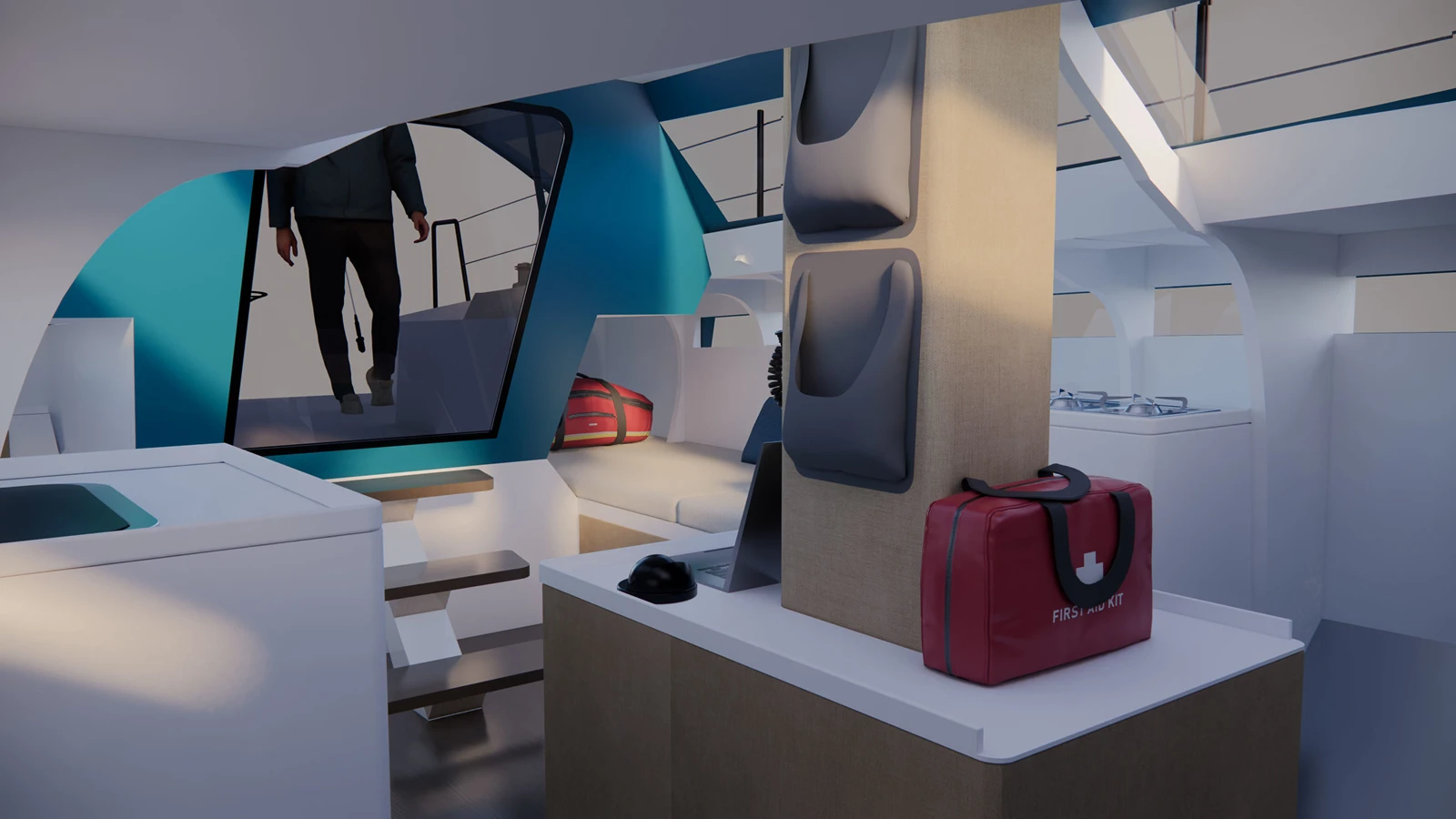
For the interior, I envision a contemporary atmosphere that combines luxury with a sense of adventure. Natural finishes and carefully considered volumes contribute to a distinctive sailboat, offering a different experience while preserving its identity.
Environmental considerations are part of the NST-IM01 project from the very beginning.
Material selection reflects this approach. Balsa wood and flax fibers, combined with recyclable resin, build on NST's expertise in developing composite materials with a reduced environmental impact.
Modularity also plays an important role. By planning for the transition from racing to cruising early in the design process, the project aims to reduce additional manufacturing, major modifications, and the waste they generate.
This continuity between both uses is intended to extend the sailboat's lifespan while helping reduce its overall carbon footprint.
The development of the NST-IM01 involves several stages of research and design.
The initial sketches explore the sailboat's lines, proportions, and different aesthetic directions. Class rule requirements are considered at this early stage, alongside the preliminary hull design.
The process then moves into 3D modeling of the exterior and interior spaces. This allows me to refine volumes, develop the layout, and explore the different configurations planned for the sailboat's racing and cruising uses.
Finally, 3D renderings and presentation materials help visualize the sailboat in its different configurations, from racing to cruising.